Tag: baking

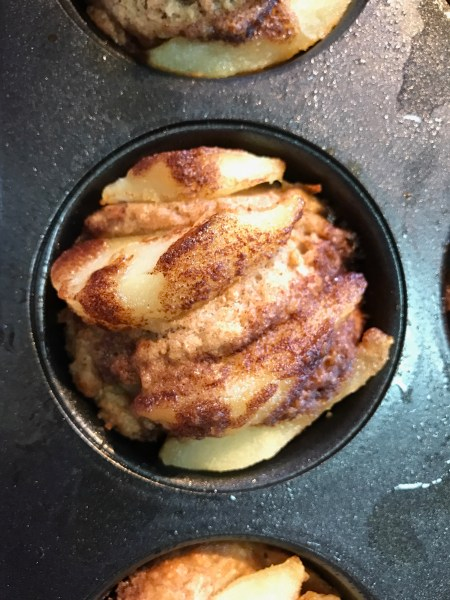
Cinnamon & pear muffins

Cinnamon & pear muffins

I’m finding myself with a lot of tinned goods recently, not unlike many people in our little shaky isles in the wake of our 7.8 earthquake.  It pays to be prepared. I’ve heard the comment more than once that tinned pears are the least exciting 

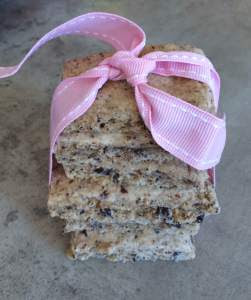
Homemade Hundreds and Thousands biscuits

Toddlers and sugar, a match made in heaven?  Probably not for their parents, but when it’s your niece’s third birthday party and you said you’d make biscuits, it’s hardly time to skimp on the sugar. I was inspired to make these little numbers by one 

Edmond’s apple steamed pudding

dpp_0007

Steamed pudding is like a sweet, jammy hug in a bowl.  I love it.  It’s a special favourite in our little country.  I was recently introduced to a New Zealand specialty steamed pudding which is the queen of both steamed puddings and now of my heart…burnt sugar steamed pudding.  Oh wow.  Like hot, soft caramel made into a cake and served with lashings of runny cream.  My mouth waters at the mere memory.

dpp_0002

So, it’s not a surprise that steamed pudding features in that bastion of all that is cooking and kiwi, the Edmonds cook book.  This particular version is jazzed up with a little apple, and all the better for it, as the tart apple partners nicely with the sweet apricot jam and the fluffy sponge.

To make this you will need:

  • 50g butter
  • 1/4 c sugar
  • 1 egg
  • 2 T apricot jam
  • 1 C plain flour
  • 1 t baking powder
  • 1/4 t salt
  • 1/2 t baking soda
  • 1/2 c milk
  • 2 T stewed apple

Cream the butter and sugar until light and fluffy.  Add the egg and beat well.  Stir in the jam.

Sift the flour, baking powder and salt into the butter mixture and fold in.

Dissolve the baking soda in the milk and add to the mixture, along with the apple.

dpp_0001

Grease a 2-cup pudding basin.  Spoon in the sponge mixture and cover the bowl with some greased baking paper.  Secure with string.

dpp_0005

Steam the pudding for half an hour, or until it is springy to the touch.  This took about 45 minutes for pudding.

Serve with cream and a cup of tea!


Chocolate-espresso shortbread

Chocolate-espresso shortbread

I was the happy competitor in a baking competition recently.  I say ‘happy’ because how could you ever not be happy when you have a genuine excuse to make sweet delicious treats several times over?  And the competition was for a great cause too…Good Bitches 

Chocolate & beetroot brownies

I know, I know, vegetables and chocolate.  My reflex reaction is ‘blurgh’ too.  But bear with me, these brownies are good, contain lots of dark chocolate and are a handy way to use up beetroot if you find yourself needing to do so. Not that I often 

Sage and cheddar biscuits or, what to do with sage?

IMG_4854

What to do with sage? Make buttery, cheesy sage and cheddar biscuits?  Yes please.

I’ve found myself with a reasonably plentiful supply of fresh sage, which is a new thing.  I have always managed to grow parsley and been left perplexed at how to use the stuff up, but my previous sage attempts have all turned into sad little heaps.

It seems I’m not the only person to pose this question. The lovely Chocolate and Zucchini blog has very helpfully compiled a list of suggestions.  Those of you who have read some of my other cheese-laced ramblings can probably imagine that sage and cheddar biscuits were a stand-out.

IMG_4817

Mmm, cheddar.  Do you know what I love most about cheddar?  It’s those delightful little crunchy bits amongst the dense, savoury cheese.  And recently, I was fascinated to learn  from this wonderful cheese blog, Fromage Homage, that they have a special name….calcium lactate crystals.

IMG_4831

These little biscuits are adapted from this recipe.  They provide a lot of bang for their buck, being so very simple to make but looking most classy served up as a home-made nibble to accompany drinks.  I need to provide you with a warning: they are incredibly buttery.  So much so that you need to have at least two.

Here’s how to make your very own:

Ingredients:

  • 125 grams butter, chilled and diced
  • 125 grams Cheddar  cheese, grated
  • 125 grams flour
  • 1 tablespoon chopped fresh sage
  • Ground black pepper

Preheat your oven to 200 degrees celsius and line two baking trays.

Combine the butter, cheese, flour, sage and pepper in a bowl.  Mix until it forms a ball (I find it easiest to use my hands for this).

Turn the dough out onto a floured surface and roll out to 0.5 cm thickness.  Use a cutter to make into rounds, treating it like a cookie doll by rolling up the offcuts and cutting out more biscuits.

Bake in the oven for 12-15 minutes until crisp and golden.  Cool for one minute and then transfer to a baking rack.

Makes 16 biscuits.
IMG_4842IMG_4849

Welsh cakes for St David’s Day

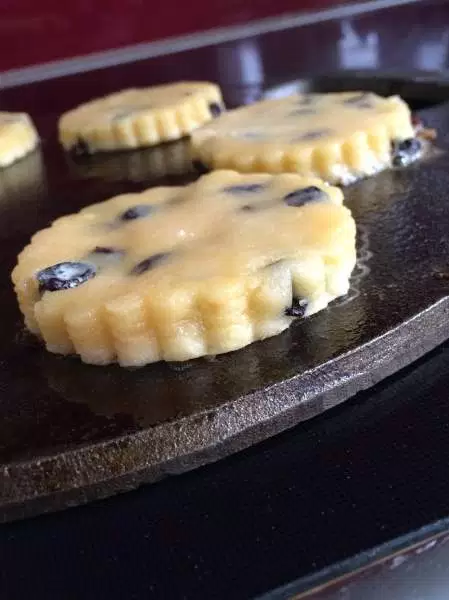
Welsh cakes for St David’s Day

I always loved visiting Wales when I lived in the UK, and what’s not to love?  Beautiful countryside, that lovely lilting accent and, most importantly, Welsh cakes. To the uninitiated, these little morsels may present like just another baked good.  I promise you, they are 

A belated Christmas cake

The busy run-up to Christmas is paved with good intentions, namely my intention to publish this post.  So forgive me for missing the boat a little with this one.  I think we can still consider this timely though, as many of us will have tin-foiled lumps 

Irish soda bread

IMG_4048

You all know how much I love a good, old-fashioned cookbook.  So I was naturally delighted when this little gem, ‘The Cookin’ Woman: Irish Country Recipes’ arrived in my letter box, thanks to my little sister (Science teacher extraordinaire and blogger at Einstein’s Kitchen).

IMG_4068

It’s appropriate not just because I love unusual cookbooks, but also because my better half is Northern Irish.  Florence Irwin is the author, lauded as Ulster’s first travelling domestic science instructor.  She came to write this book after her expeditions throughout County Down. Her recipes include not only traditional fare and specialties such as dulse, but also suggestions for the modern-day cook such as the outlandish ‘imaginative and healthy vegetable dishes,’ and some household tips.

I myself would be interested to know quite how this little book found its way to this side of the world.  The original sales sticker on the back says it is from Four Provinces Bookshop (sadly now closed), 244 – 246 Grays Inn Road, London.  From there to Port Chalmers…who knows how that happened?

One of my favourite Irish treats is Soda Bread, or Soda Farl.  The leavening agent is baking soda, and the bread itself is dense and wholesome with a pleasant soda twang.

IMG_4074

Naturally, the Cookin’ Woman has a recipe for Soda Bread.  It’s surprisingly easy to make, being rather like whipping up a batch of scones, and it resulted in a delicious little loaf.  I am pleased to report passed the Northern Irish test – all gone rather quickly and washed down with plenty of tea.

You will need:

  • 1.5 pounds or 680 grams plain flour
  • 1 teaspoon baking soda
  • 1 teaspoon cream of tartar
  • 1 teaspoon salt
  • Approx. 3/4 pint or 350 mls buttermilk (I used plain yoghurt thinned with a little milk)

Preheat your oven to 375 Fahrenheit or 190 Celsius, leaving the tray you will be using for the soda bread in the oven to warm up.

Sift the flour, baking soda, cream of tartar and salt into a large bowl.  Make a well in the centre.

IMG_4003

At this point, Florence becomes very firm on instructions to ensure a light loaf.  One is not to add it ‘drop by drop.’ Instead, start with adding about half the buttermilk to the well in the centre.  Using a knife, draw the batter from the sides and add more liquid as the batter thickens.

To ensure a light loaf, you don’t want it over-worked  ‘ragged’ in the centre.  And so I stopped mixing at about the point where it was lumpy and not to dry.

IMG_4028

Spread the warmed tray with flour.  Tip out the dough, dredge it in flour and knead lightly, tucking in the edges to form a circle as you go, and doing so ‘very lightly indeed.’  When the top is smooth, turn it upside down (to distribute flour to what is now the top of the loaf) and roll it to about 1 inch thick.

Cut it into farls.  Yes, I had to check this out too – ‘farl’ is an old Scottish word for quarter.

IMG_4033

Florence doesn’t specify a time, but just that one bakes it until it is ‘risen, nicely brown and cooked to the centre.’  This took my farls 30 minutes.

Delicious hot with butter and tea!

IMG_4050


Restorative date loaf

Restorative date loaf

A friend in need is a friend indeed, do you think?  I don’t know the exact origin of this phrase (although the finger is pointed at a certain Quintus Ennius), but I do know that anyone in any kind of need can do with a tasty